top of page

Facilitating an adaptable
and local democracy
Why?
Eindhoven's recent local election saw a participation rate of just 38%, showing that democracy isn't truly reflecting people's voices.
How could we give citizens and politicians a chance at a more vibrant democracy?
How? With politicians.
We started by interviewing politicians, one of whom claimed that “Everyone should be a politician.” We put this idea into practice by offering citizens a stage to speak.


We learned that politicians’ modes of speaking are not accessible to everyday citizens.
People are interested but need familiar ways to share.
How? With citizens.
We then interviewed citizens, from whom we learned that "political spaces do not feel welcoming.” Using digital creation, we re-imagined political spaces.

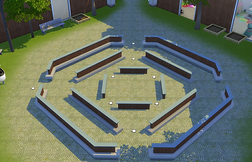

Architectural changes might help build new futures.
But, we first need to bring political spaces to citizens to foster familiarity and trust.
What should we build?
How could we facilitate democracy in spaces that are accessible and familiar to citizens?
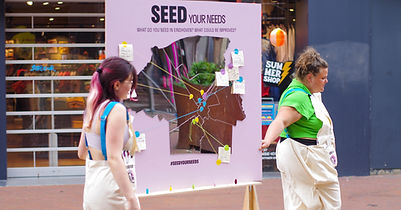
1. Go into public spaces

2. Engage with citizens
3. Collect their inputs


4. Turn it into hyper-local councils
Then? How do we share insights with politicians?
To share the collected needs with politicians and dive into the issues shared with the facilitator, we organized planting sessions, also known as hands-on podcasts. During these, citizens explored their needs and possible solutions, while politicians listened.
While the flowers were growing, politicians had to take steps to address citizens' needs, fostering accountability and patience. Once bloomed, we organized sharing sessions.


Acknowledgement:
A big thank you to Daisy Dawson for the co-facilitation and conceptualizing, thank you to Yufei Gao for the stunning images, and thank you to all the citizens and politicians that participated in the initiative.
bottom of page